
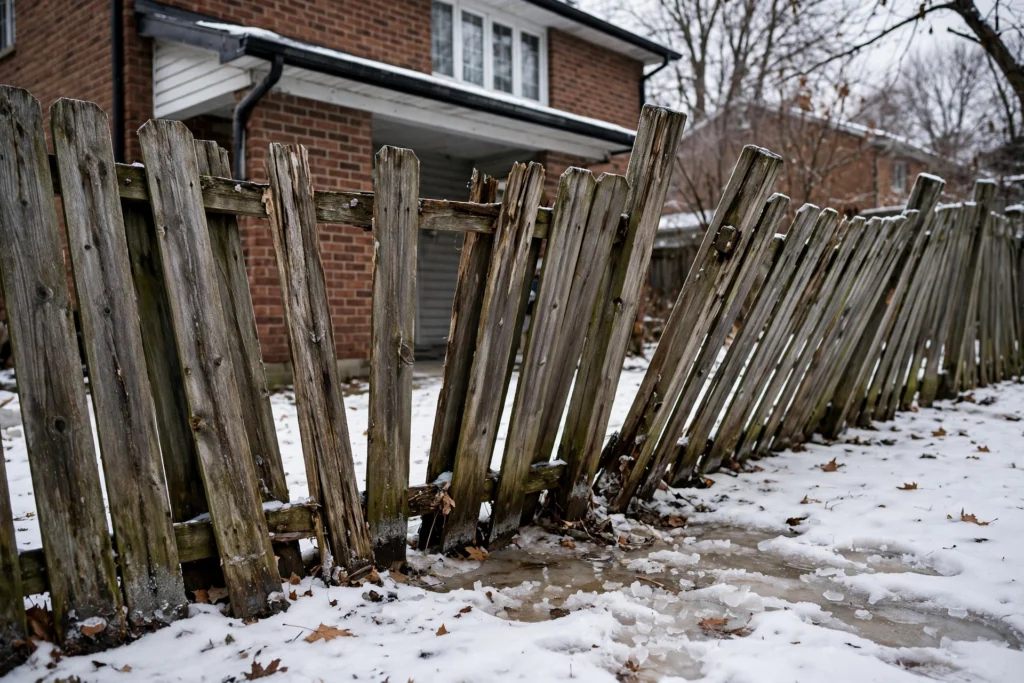
Every winter, Hamilton fences take the same quiet beating. A post that was plumb in October leans by February. A gate in Stoney Creek that latched perfectly in fall needs a lift and a shove by January. Boards in a Westdale backyard split, bow, or pop a screw, and a fence on the Mountain that looked solid starts to rattle in a lake-effect wind.
Most of that is not bad luck, and it is not always a failed fence. It is freeze-thaw — water in the soil and in the wood, freezing, expanding, thawing, and freezing again, sometimes in the same week. Hamilton’s escarpment weather makes the cycle sharper: temperatures swing across zero for weeks, meltwater soaks in during the day, and a hard freeze locks it in overnight.
This guide explains what freeze-thaw actually does to posts, panels and gates, how to tell damage you should fix now from damage that can safely wait for spring, and how to check a Hamilton fence in about fifteen minutes before you decide.
How freeze-thaw moves a fence
Three mechanisms do most of the work.
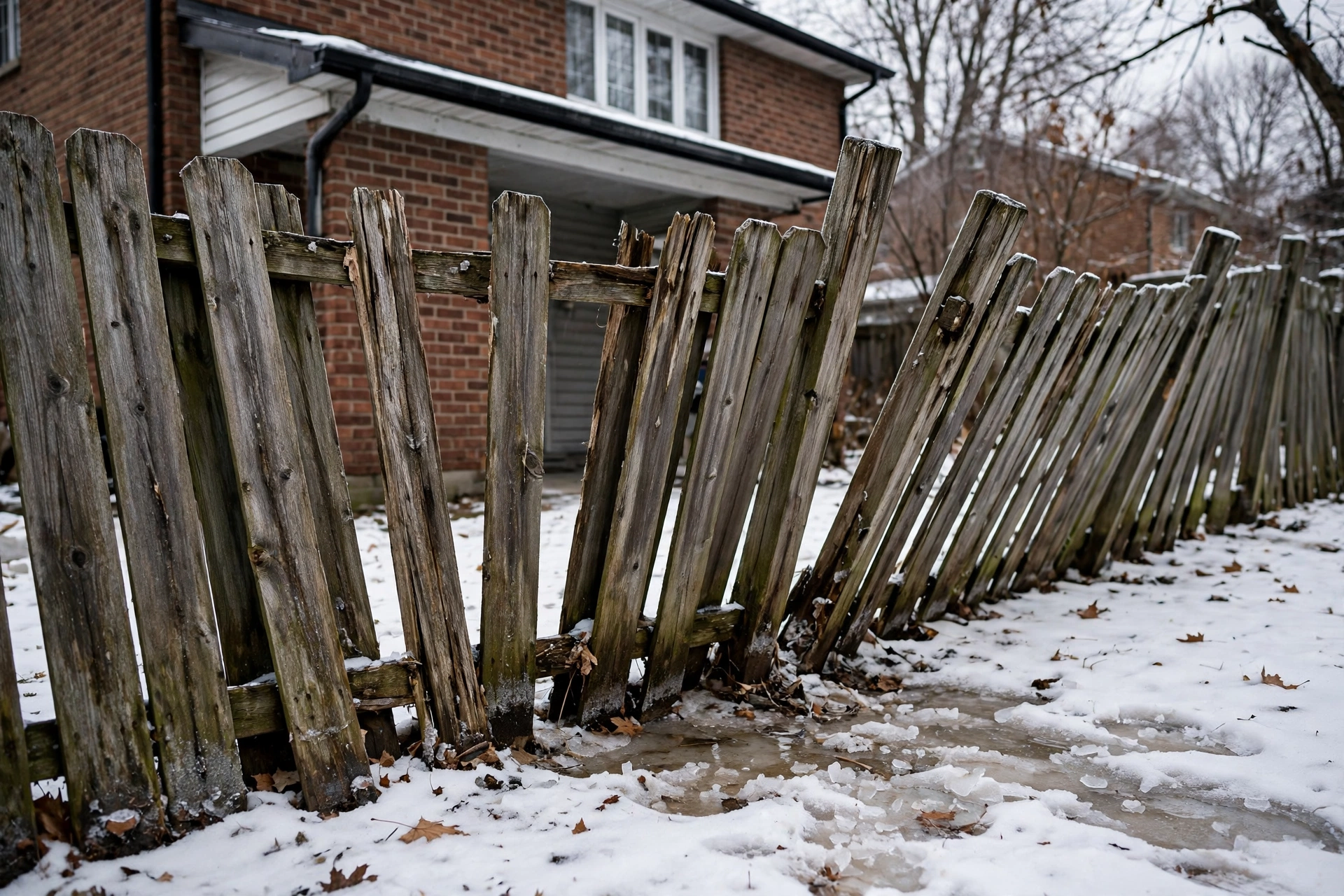
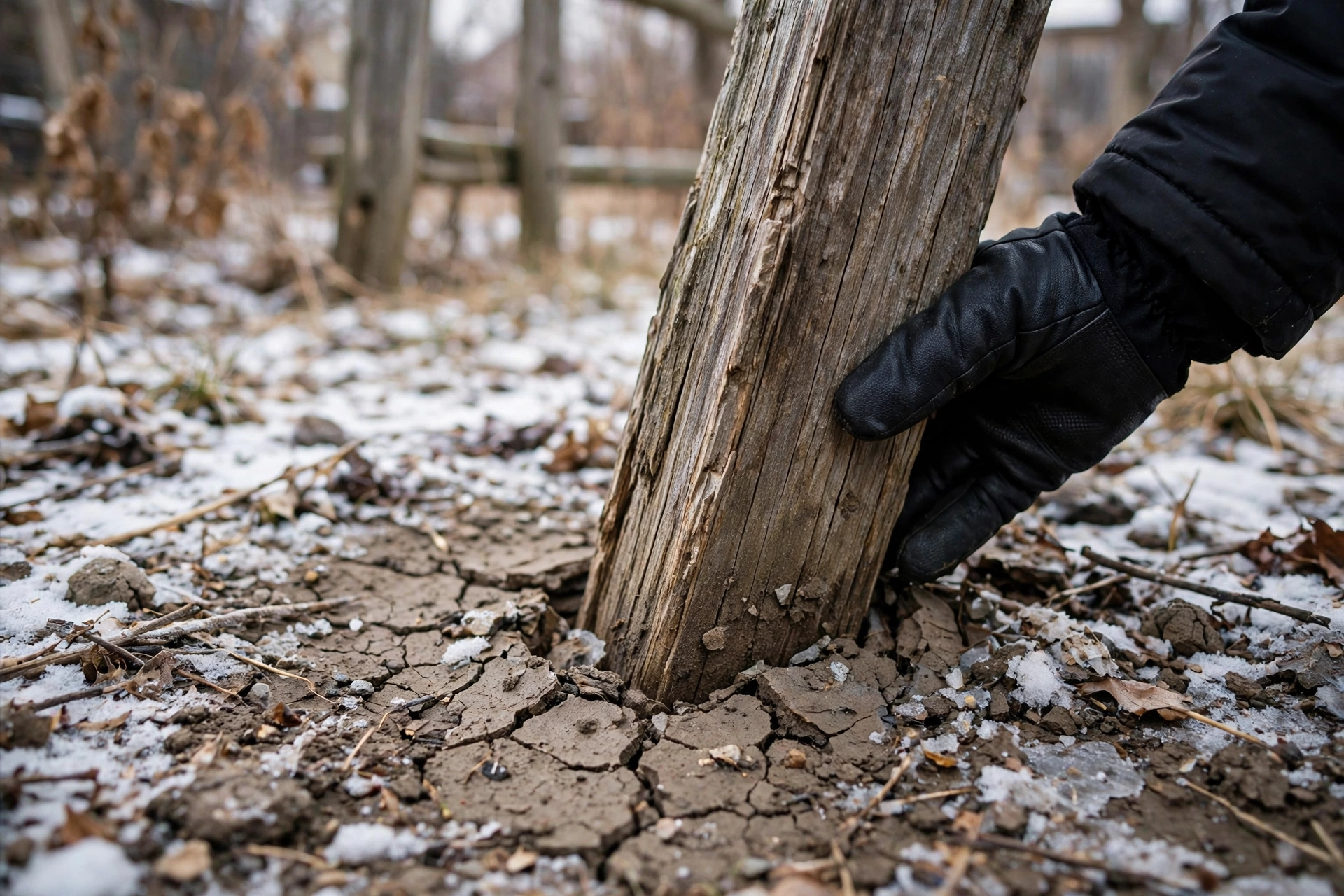
Frost heave at the post. When water in the soil freezes, it expands and can push upward. A fence post set too shallow, set without proper drainage at the base, or surrounded by clay-heavy soil that holds water — common on parts of the Mountain, in Ancaster and in newer Stoney Creek lots where clay sits close to the surface — can be lifted a little each winter. It does not always settle back to exactly where it started. Over several winters, that small movement becomes a lean, a raised post, or a line that no longer looks straight.
Water in the wood and at the joints. End grain at the tops and bottoms of boards, the point where rails meet posts, and any spot where snow piles against the fence all soak up meltwater. When that water freezes, it widens small checks and splits. Paint or stain that has failed stops shedding water, so older fences in Kirkendall, Durand and Dundas — where many fences are now well into their second decade — often show splitting and rot starting at the same wet points, not evenly across the whole fence.
Ground movement and wind together. A heaved post changes the geometry of the whole run. Rails pull, fasteners loosen, and then winter wind has something to work on. A panel that is only slightly loose in December can work itself noticeably looser by March if every gust is flexing screws in softened wood. That is why a fence can look “fine, just a lean” in fall and be a repair in spring.
What to check: a fifteen-minute fence walk
Do this walk on a calm day when you can see the full line, ideally after a thaw when the ground is soft enough to show movement.
- Sight down the line. Stand at one end and look along the top. Note which posts lean, which lean together in one direction, and which single post is out of line with the rest. A whole run leaning one way often points to wind and soft ground. One post out of line often points to that post’s footing.
- Push test at each post. Grip the top of each post and push firmly. A small amount of flex in a long run is normal. A post that rocks in its hole, moves at ground level, or feels spongy at the base is telling you the footing or the wood at grade has failed — that is the post to deal with first.
- Check the base. Look where each post meets the soil. Soil, mulch or snow piled high against wood holds moisture at exactly the most vulnerable point. Posts that are cracked, soft, or flaking at ground level need a closer look, because above-ground soundness means little if the base is gone.
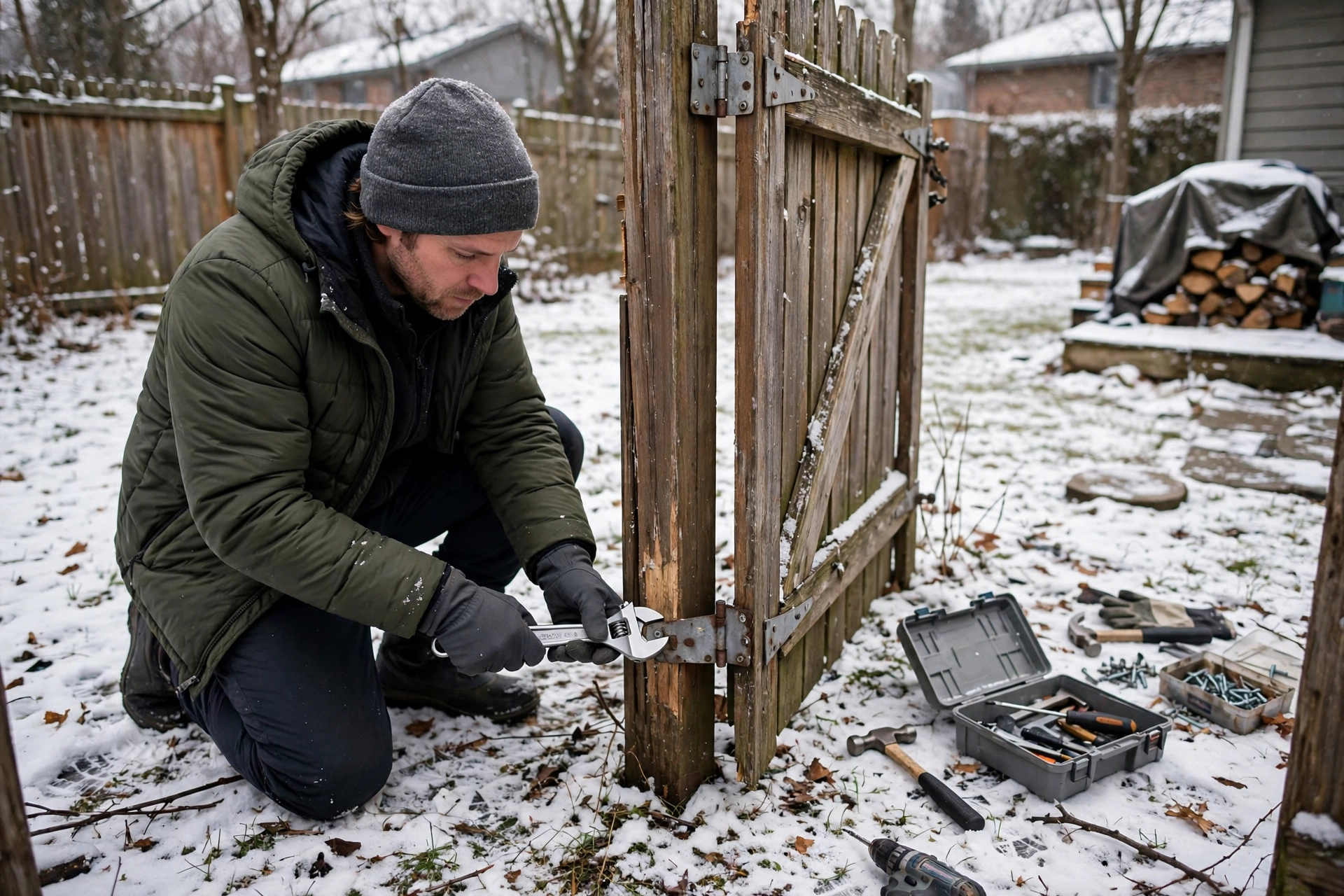
- Open and close every gate. A gate that suddenly will not latch, drags on the ground, or has a gap at the top on one side has usually moved because one of its posts moved. Note whether the problem is the gate itself — sagging hinges, a warped frame — or the post it hangs from.
- Look at boards and rails. Split boards at fasteners, boards bowing away from rails, popped nails or screws, and rails pulling away from posts are all freeze-thaw signatures. Check the shady side too: north-facing and escarpment-shaded fences in Dundas and Westdale stay wet longer and often age faster on that side.
- Check where snow and water collect. Downspouts discharging beside a post, grading that sends meltwater along the fence line, and snowbanks from a driveway piled against panels in Waterdown or Binbrook lots all feed the next cycle. Where the water goes matters as much as the state of the wood.
Our Fence Repair in Hamilton page covers the repair work itself — posts, panels and gates — once you have decided what your fence needs.
Fix now, even in winter
Some fence problems get worse, less safe, or more expensive if they wait until April:
- A post that rocks or has snapped at the base. A run held up only by its rails can come down in a winter storm, and a fallen fence is a bigger job than a braced one. Temporary bracing can hold a line safely until a proper post repair is practical.
- A gate that will not latch. If a gate secures a pool area, a dog, or a side yard that needs to stay closed, a latch failure is not a spring problem. Gates can often be re-hung, braced, or adjusted in winter even when a full post replacement should wait.
- A leaning fence on a property line, walkway or driveway. If a lean is progressing toward a sidewalk, a neighbour’s yard, or a place where cars and people pass, do not watch it get worse through freeze-thaw season.
- Loose panels in exposed locations. On the Mountain and in open Stoney Creek and Waterdown lots, wind is the multiplier. Tightening, re-fastening or replacing a failing rail now prevents a panel failure in the next storm.
- Rot or a break at ground level where children or pets push against the fence. Soundness at hand height is the safety test. If a board or post gives when pushed, treat it as a now job.
Winter repairs have limits — concrete for a new post, for example, needs the right conditions, and frozen ground can make digging slow and costly — but bracing, gate work, panel and rail repairs, and making a fence safe are all practical in winter.
What can usually wait for spring
Waiting is a legitimate plan for damage that is stable, cosmetic, or better done in good conditions:
- A slight, stable lean in a post that is still solid at the base. If the push test is firm and the lean has not changed, mark it, photograph it, and re-check after the spring thaw. Many heaved posts settle partway back.
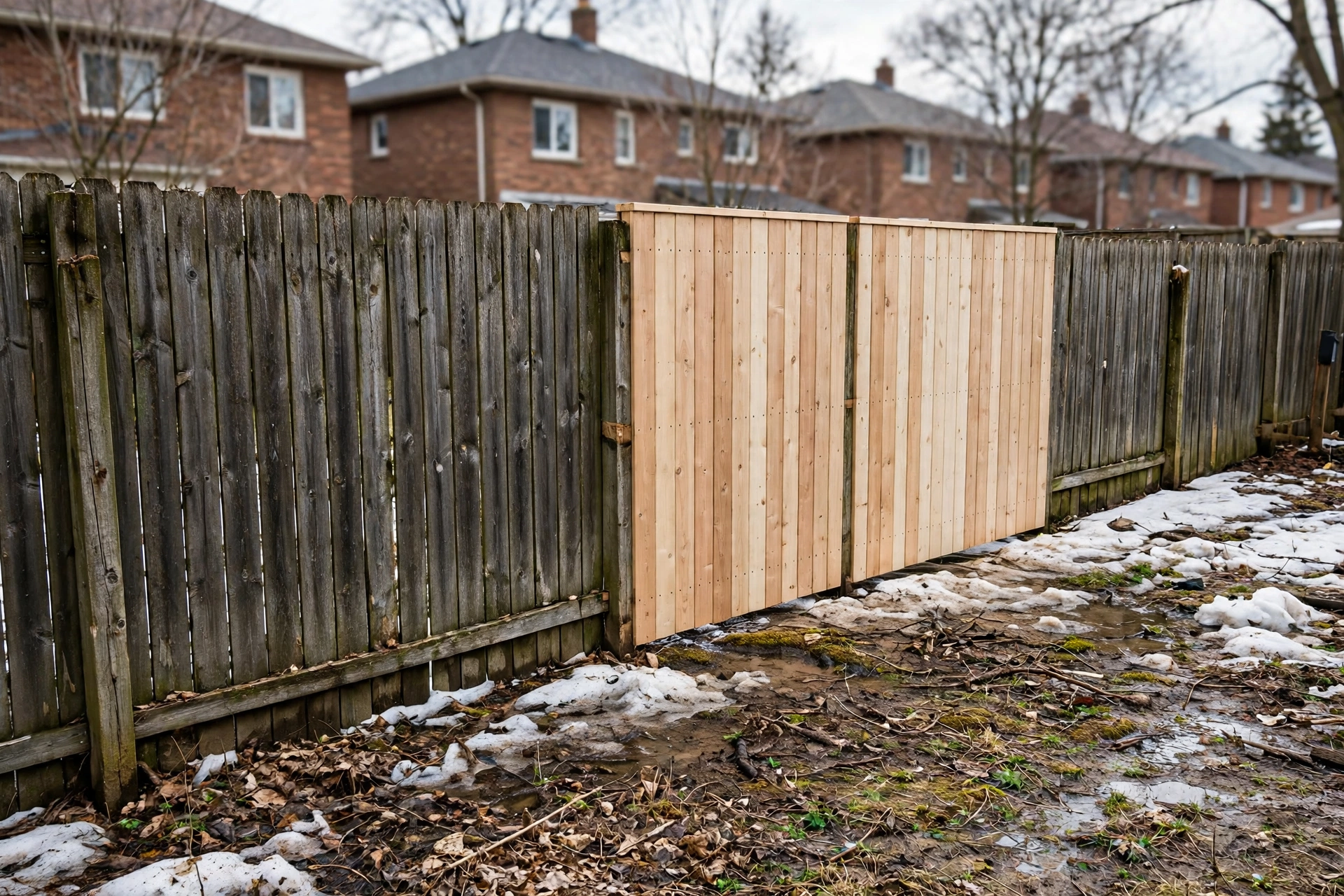
- Single split or bowed boards that are still fastened. One damaged board in an otherwise sound panel can be replaced in spring in a single visit with other boards.
- Staining, re-sealing and cosmetic work. Finishes need dry wood and warmer temperatures to cure properly. Winter is for notes and photos, not stain.
- Full post replacement in deep frost, when the fence is stable and braced. Digging and setting a post is cleaner, faster work once the ground thaws — provided the fence is made safe in the meantime.
The key word is stable. “Wait for spring” only works if you have checked, braced anything questionable, and set a date to look again after thaw — not if winter damage is simply put out of mind.
Small wood repairs around a fence — a gate frame that has racked, a cap or trim piece that has split, a small section of lattice that has let go — often fall under general Carpentry in Hamilton work, and they are good candidates to bundle with a spring fence visit so one trip handles the whole list.
A neighbourhood quick pass
Westdale, Kirkendall and Durand: Older fences, mature trees and shaded yards. Watch root movement added to heave, posts rotting at a damp base, and older fasteners giving up. Tree roots do not stop for winter, and a post near a mature maple has two forces on it.
The Mountain and Ancaster: Clay soil and sloped lots. Heave is the main story, along with meltwater running along fence lines on slopes. Check grading and where downspouts discharge before blaming the posts alone.
Dundas: Escarpment shade keeps fences wet and frozen longer. The shaded side ages first — check it deliberately, because the sunny side can look reassuringly fine.
Stoney Creek and Waterdown: Newer fences in newer subdivisions can move early if posts were set shallow or drainage at the base was poor. A fence that leans in its first few winters is a footing problem to fix properly, not just straighten.
How to help a fence through the rest of winter
- Keep snow from being piled hard against panels, especially wet snow cleared from driveways.
- After a storm, walk the line once. Catching a loosened panel early is a tightening job; catching it after a month of flexing is a replacement.
- Photograph any lean from the same spot each time. A dated photo tells you whether a post is moving far better than memory does.
Decide now, repair in the right order
If you are looking at a Hamilton fence this winter, do the fifteen-minute walk first: sight the line, push each post, test each gate, and look hard at the bases. Fix safety, latching and storm-risk problems now. Photograph and hold the stable, cosmetic and full-replacement work for spring — with bracing in place where a post is questionable.
Call 289-276-1099 or visit our Contact page to book a visit. Service is available in Hamilton — including Westdale, Kirkendall, Durand, the Mountain, Ancaster, Dundas, Stoney Creek and Waterdown — daily from 9 a.m. to 9 p.m. at 202 St Clair Blvd, Hamilton, ON L8M 2P1.
A fence checked in winter is a fence you repair once, on purpose — not one a March storm decides for you.