

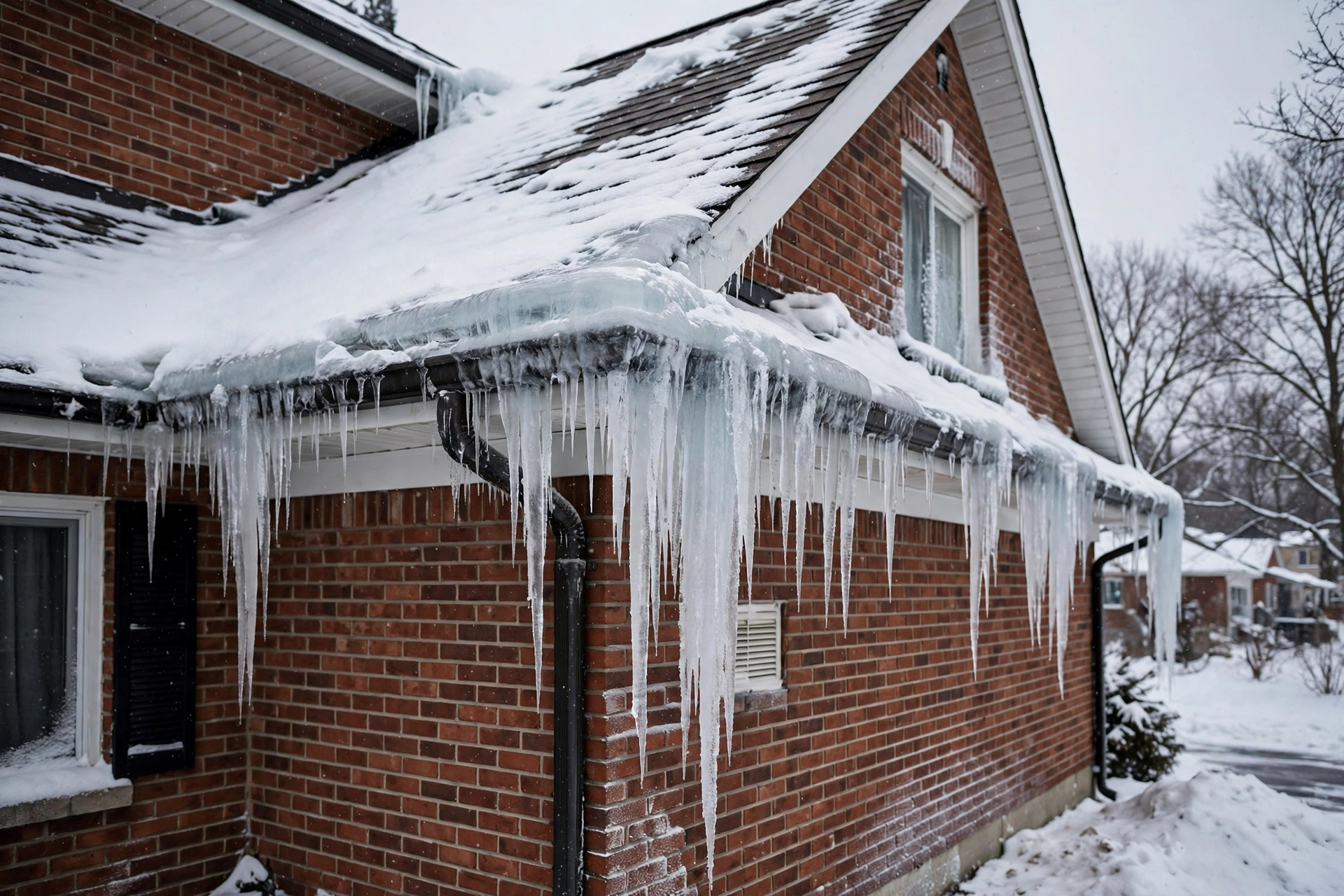
Hamilton winters do not ease in. A week of lake-effect snow, a thaw off Lake Ontario, then a hard freeze again — that freeze-thaw cycle is exactly what turns a neglected gutter into an ice dam, and an ice dam into water inside your walls.
The good news is that most ice dam damage starts with things you can see in October: a gutter full of leaves, a downspout that drains too close to the house, a loose section pulling away from the fascia, and roof edges where heat is escaping. This checklist walks through what to check before winter, neighbourhood by neighbourhood, because a century home in Durand does not shed water the same way a newer home on the Mountain does.
Why Hamilton homes are prone to ice dams
An ice dam forms when snow on the warmer upper part of a roof melts, runs down, and refreezes at the colder eave. The ice builds a ridge, meltwater pools behind it, and that water looks for a way in — under shingles, into soffits, and down inside exterior walls.
Hamilton makes that cycle worse in a few specific ways. Homes below the escarpment in Westdale, Kirkendall and Durand are often older, with steeper roofs, complex rooflines, valleys and additions built in different eras. Insulation and ventilation in those attics vary a lot from house to house, so warm spots on the roof are common. On the Mountain, in Ancaster and in Stoney Creek, exposure is different: more wind-driven snow, longer eaves on two-storey homes, and gutters that take a heavier load when a thaw hits all at once. In Dundas and Waterdown, homes tucked near the escarpment and Cootes Paradise can see runoff and shade patterns that keep one side of a roof frozen while the other side is melting.
None of that means an ice dam is inevitable. It means your gutters, downspouts and roof edges need to be working together before the first real snow stays.
1. Clear the gutters — completely, not just the visible leaves
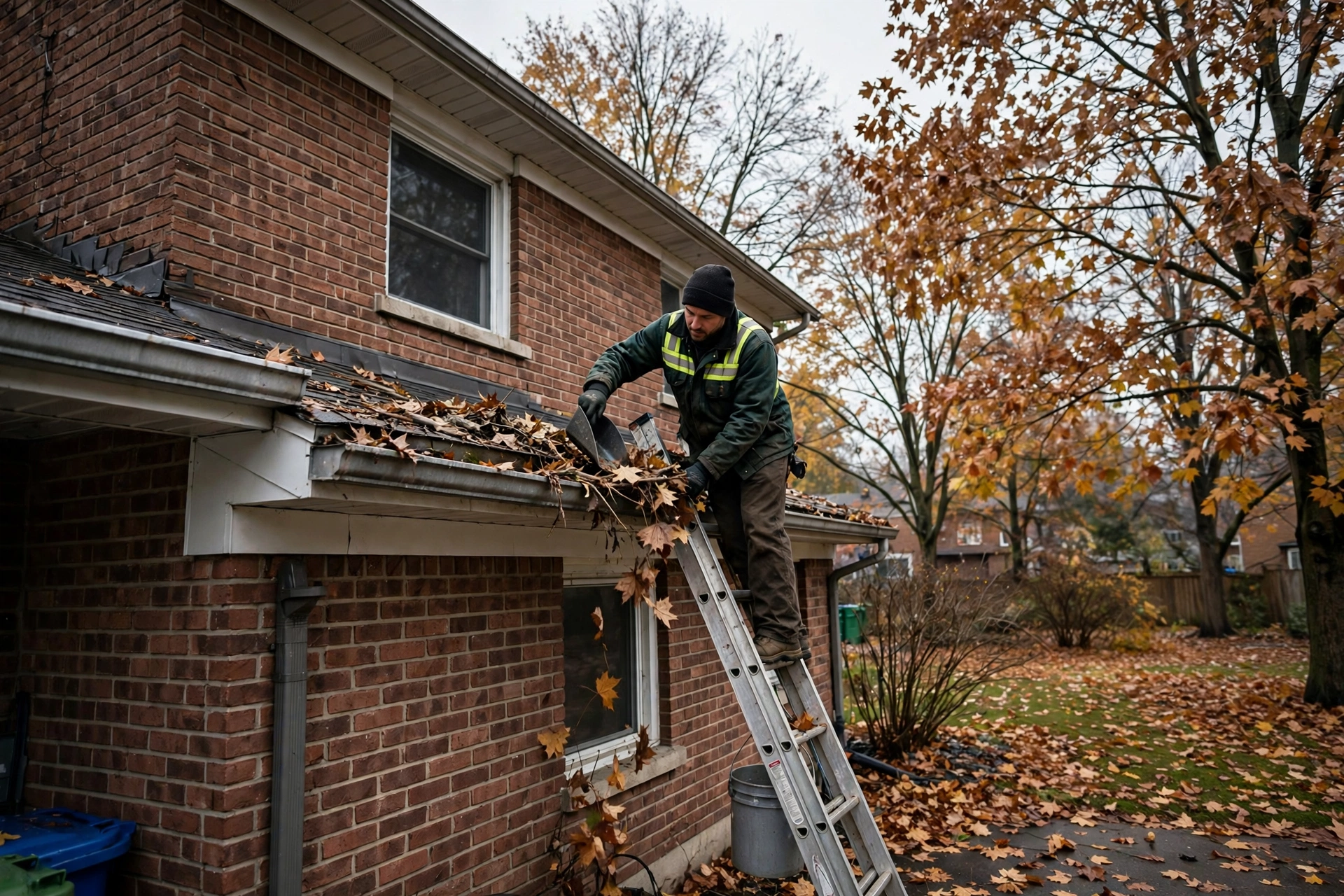
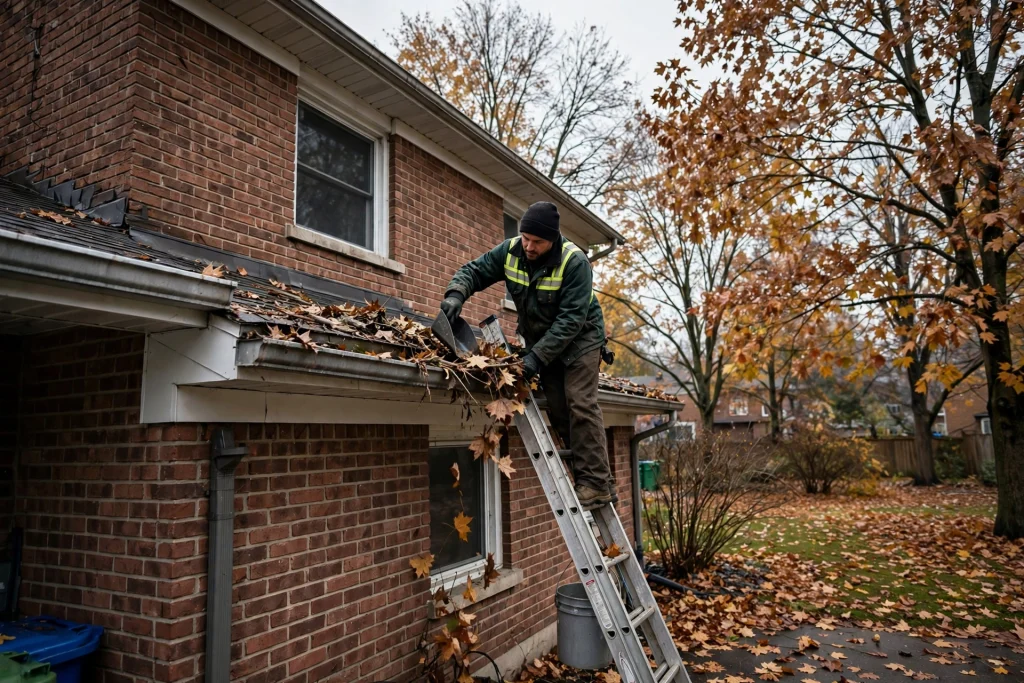
Start with a full clean-out. In Hamilton, maples, oaks and the mature street trees in Westdale and Durand drop a heavy leaf load, and a gutter that looks clear from the ground can still hold a mat of wet leaves and shingle grit at the downspout outlet.
Check for:
- Leaves and debris sitting in the trough, especially at corners and valleys
- Grit and granules from aging shingles collecting at low spots
- Downspout elbows clogged at the top — a common hidden blockage
- Standing water that does not drain toward the downspout, which signals a sag or a wrong slope
If a section is sagging, water will pool there in winter and freeze first. Tightening hangers, re-securing a loose section, or replacing a damaged length now is far easier than dealing with a pulled-away gutter in January. If sections are cracked, rusted through, or repeatedly pulling loose, look at replacement rather than another patch — our Gutter Installation in Hamilton page explains what a proper install covers.
2. Check downspouts and where the water actually goes
A clean gutter that dumps water beside your foundation has only done half the job. Walk each downspout to the ground and confirm:
- The elbow at the bottom is attached and not crushed
- Extensions carry water well away from the foundation, not onto a walkway where it will freeze into a sheet
- Splash blocks have not shifted over the summer
- Underground drains, where present, are not visibly blocked at the outlet
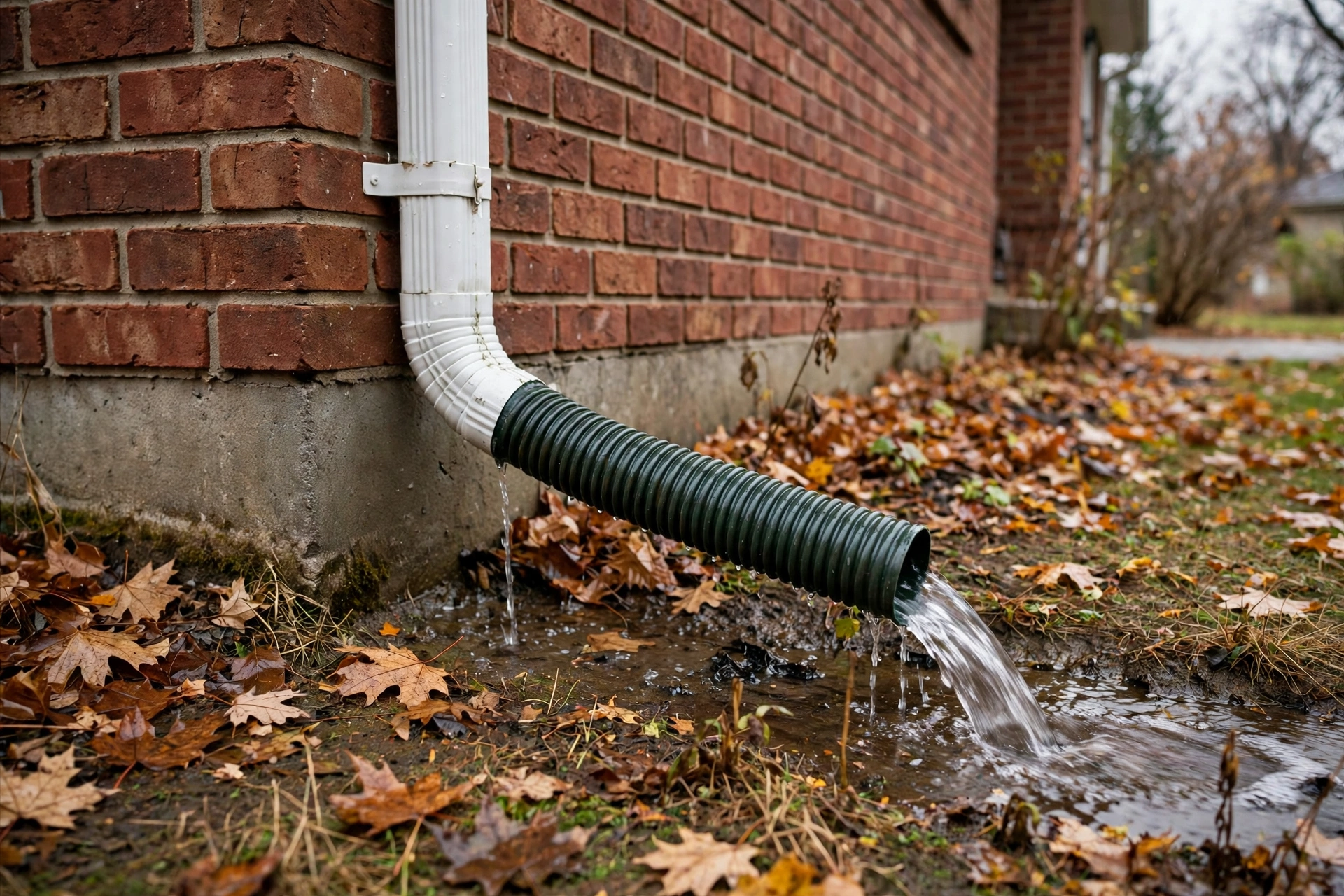
This matters doubly in Hamilton’s older areas, where foundations are stone, block or older poured concrete and do not love extra water in a freeze-thaw cycle. It also matters for basement moisture — a theme we will return to in other guides — because eavestrough overflow is one of the most common, fixable sources of a damp basement corner.
3. Look at the roof edge, soffit and fascia
From the ground, and up close if you are safely on a ladder, look along the eave:
- Is the fascia straight, or is the gutter pulling it outward?
- Is paint peeling or wood softening behind the gutter? That often means overflow has been happening for a while.
- Are soffit vents blocked by insulation, paint or debris? Blocked soffits reduce attic ventilation, which makes the roof deck warmer and ice dams more likely.
- Are shingles at the eave curling, missing or damaged? Water backing up behind ice finds those weak spots first.
You do not need to diagnose the whole roof. You are looking for the obvious weak points at the edge, because that is where ice dams do their damage.
4. Seal the small gaps that let water and cold air move
Overflow and meltwater exploit small openings: a gap in caulking around a fascia joint, a cracked seal where a downspout bracket meets siding, an opening around an exterior light or hose bib. Sealing those gaps before winter helps keep driven snow and meltwater out, and it reduces drafts at the same time.
This is detail work, but it is the kind of detail that separates a house that weathers a thaw well from one that stains a ceiling. If you are already having exterior sealing looked at, our Caulking Services in Hamilton page covers where caulking helps — and where it should not be used as a substitute for fixing the underlying drainage problem.
For the full range of seasonal repairs, see our Services in Hamilton hub.
5. Think about heat loss at the top of the house
Gutters alone do not cause ice dams, and cleaning them alone does not prevent every dam. Uneven roof temperatures play a big role. Signs that heat is escaping unevenly include:
- Snow melting in patches on the roof while other areas stay covered
- Icicles forming heavily along one eave but not others
- A noticeably warm attic on a cold day
You may not fix insulation or ventilation in a single fall visit, and this post is not suggesting a major attic project on a deadline. Do note the pattern, keep the eaves and gutters clear so meltwater has somewhere to go, and plan any larger work for spring. In the meantime, never chip at an ice dam with a hammer or axe — that damages shingles and gutters. If a dam forms mid-winter and water is entering, treat the interior leak first, protect finishes, and get help for safe removal.
A neighbourhood-by-neighbourhood quick pass
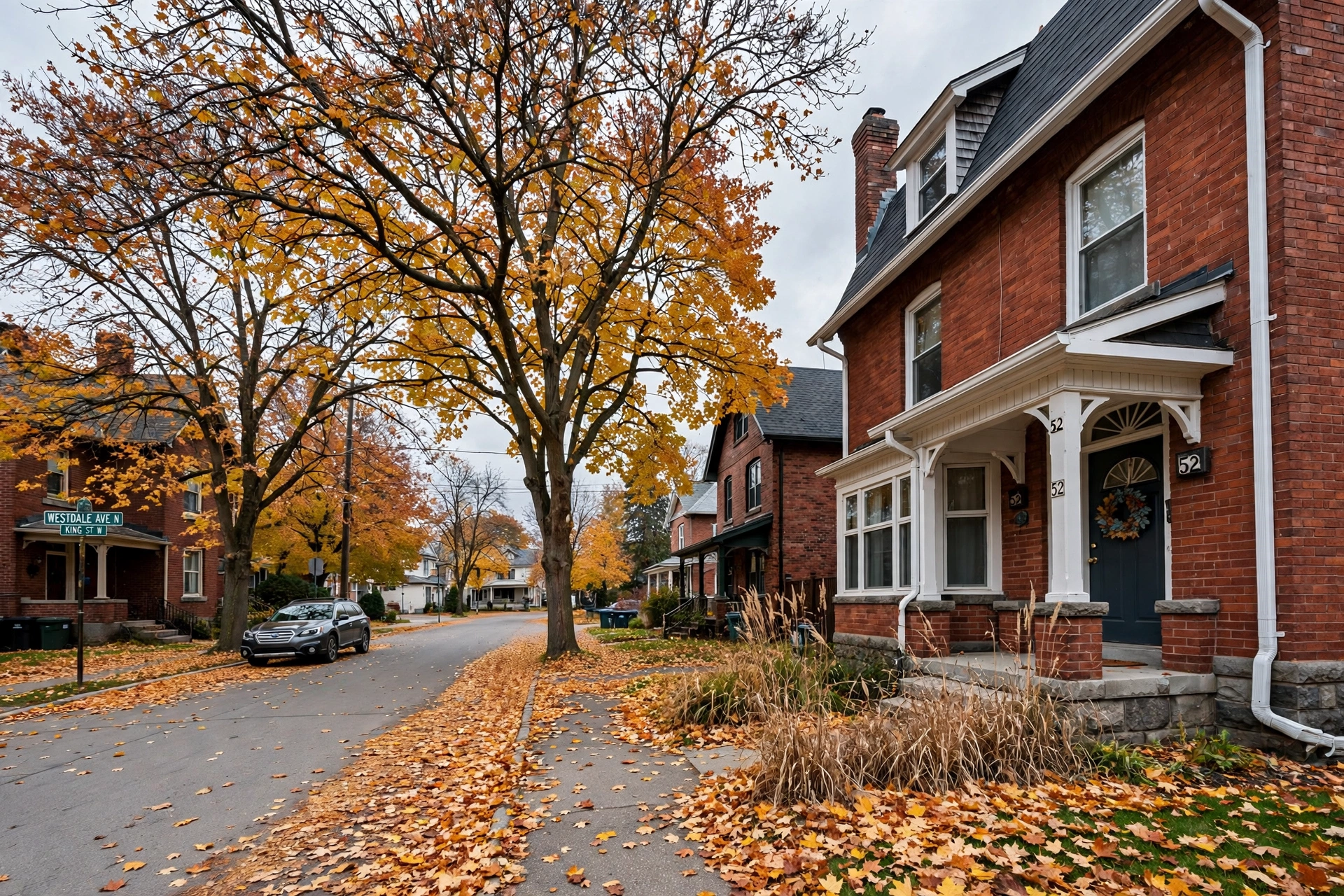
Westdale, Kirkendall and Durand century homes: Prioritise valley gutters, additions with shallow roof slopes, and downspouts that drain close to stone foundations. Mature trees mean a second gutter check in late November is worthwhile, after the last leaves fall.
The Mountain and Ancaster: Check longer gutter runs for sag in the middle, confirm hangers are secure for snow load, and make sure downspout extensions have not been removed for lawn work and forgotten.
Dundas: Shaded, escarpment-side lots can hold ice longer. Pay extra attention to north-facing eaves and to gutters under overhanging branches.
Stoney Creek and Waterdown: Newer subdivisions often have longer, higher rooflines where a clogged downspout outlet is hard to see from the ground. A binocular check from the street can reveal overflow staining on siding before winter makes it worse.
When to call for help instead of climbing
Ladder work on a two-storey Hamilton home, especially once frost makes rungs and roofs slippery, is not a casual weekend job. Call for help if:
- Gutters are pulling away, bent, or leaking at seams you cannot reach safely
- Fascia or soffit wood feels soft or looks rotted
- Downspouts need rerouting, extensions, or replacement sections
- The same eave has formed ice dams in previous winters
- You can see overflow stains, peeling paint, or interior ceiling stains near an exterior wall
Fixing slope, hangers, seams and drainage before snow stays on the roof is the whole point of a fall check. Done now, it is straightforward work. Done in February, the same problem usually involves ice, water inside the house, and a much harder repair.
Book a pre-winter gutter check in Hamilton
If your gutters need cleaning out, re-securing, sealing, repair or replacement before winter, do not wait for the first ice dam to make the decision for you.
Call 289-276-1099 or visit our Contact page to book. Service is available in Hamilton — including Westdale, Kirkendall, Durand, the Mountain, Ancaster, Dundas, Stoney Creek and Waterdown — daily from 9 a.m. to 9 p.m. at 202 St Clair Blvd, Hamilton, ON L8M 2P1.
Get the gutters clear, the downspouts draining away from the house, and the roof edge sealed now, and Hamilton’s freeze-thaw winter has far less to work with.