
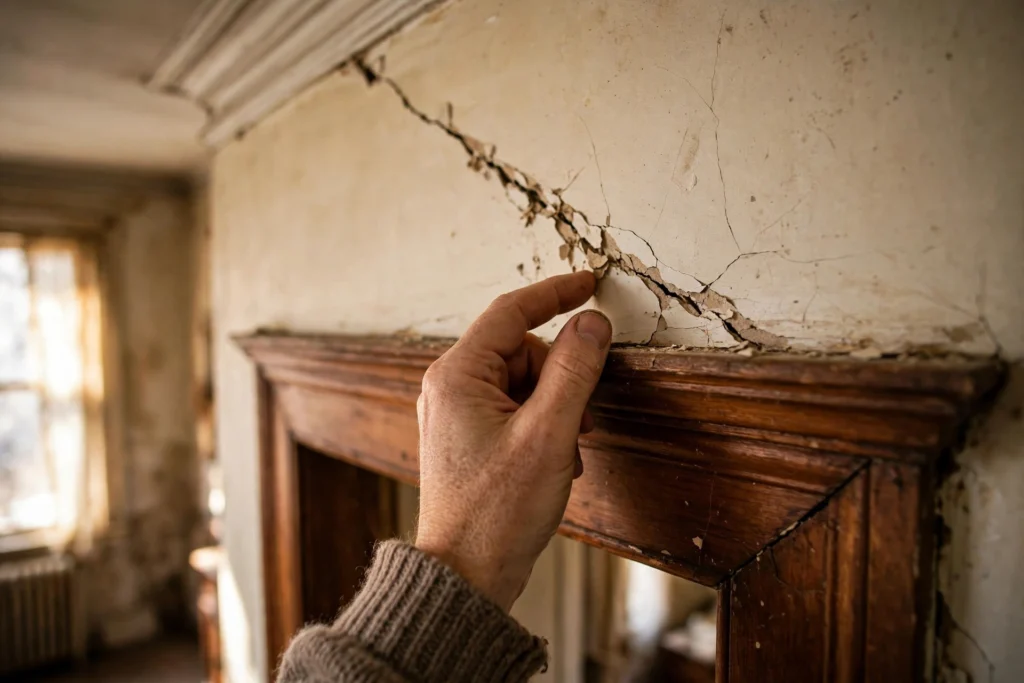
A crack appears above a bedroom door in Kirkendall. A long, thin line runs diagonally from the corner of a window in Durand. In a Westdale dining room, the plaster sounds hollow when you tap it, and a section near the ceiling has started to bulge. On the Mountain, in a house built in the 1960s, the drywall seams in the hallway keep opening every winter, no matter how many times they are filled.
These are not all the same problem, and they do not all get the same repair. Hamilton’s older homes hold at least three different wall systems — original plaster over wood lath, plaster that has been skimmed or patched over decades, and drywall from later renovations — sometimes all three in the same house. A repair that works beautifully on drywall can crack back out of plaster in a single season, and a crack that looks alarming can be a century of normal settling, while a small crack that keeps growing deserves a closer look.
This guide explains how to read the cracks in a Hamilton home, what settling, temperature and moisture actually do to plaster and drywall, and how to tell a cosmetic repair from a sign to pause and check further first.
What is actually inside an older Hamilton wall
In Westdale, Kirkendall, Durand and older parts of Dundas, many homes were built with plaster over wood lath — thin wood strips nailed to the studs, with wet plaster pressed into the gaps to form keys that hold the wall together. It is a heavy, hard, forgiving wall when it is sound, and it handles sound and everyday knocks better than many owners expect.
Problems start when those keys break. A section of plaster can stay in place for years after it has partly let go of the lath, held only by paint and habit, until vibration, a slammed door, or a small leak finishes the job and it sounds hollow, cracks in a map pattern, or sags.
Later decades added layers. A 1970s renovation may have covered plaster with drywall. A 1990s repair may have patched plaster with drywall compound that was never meant to carry that depth. A newer Mountain, Ancaster or Stoney Creek home is mostly drywall on wood or steel studs from the start — a simpler system, but one that still shows settling, truss movement and seasonal gaps at seams and corners.
Knowing which system you have matters before any filler goes on. Tap the wall, look inside an outlet box with the power off if you are comfortable doing so, or check an unfinished closet or basement stairwell where the back of a wall is exposed. Our Drywall Repair & Installation in Hamilton covers the repair and installation work itself for both drywall and plaster-era walls; the first step is always identifying what is there.
How to read a crack
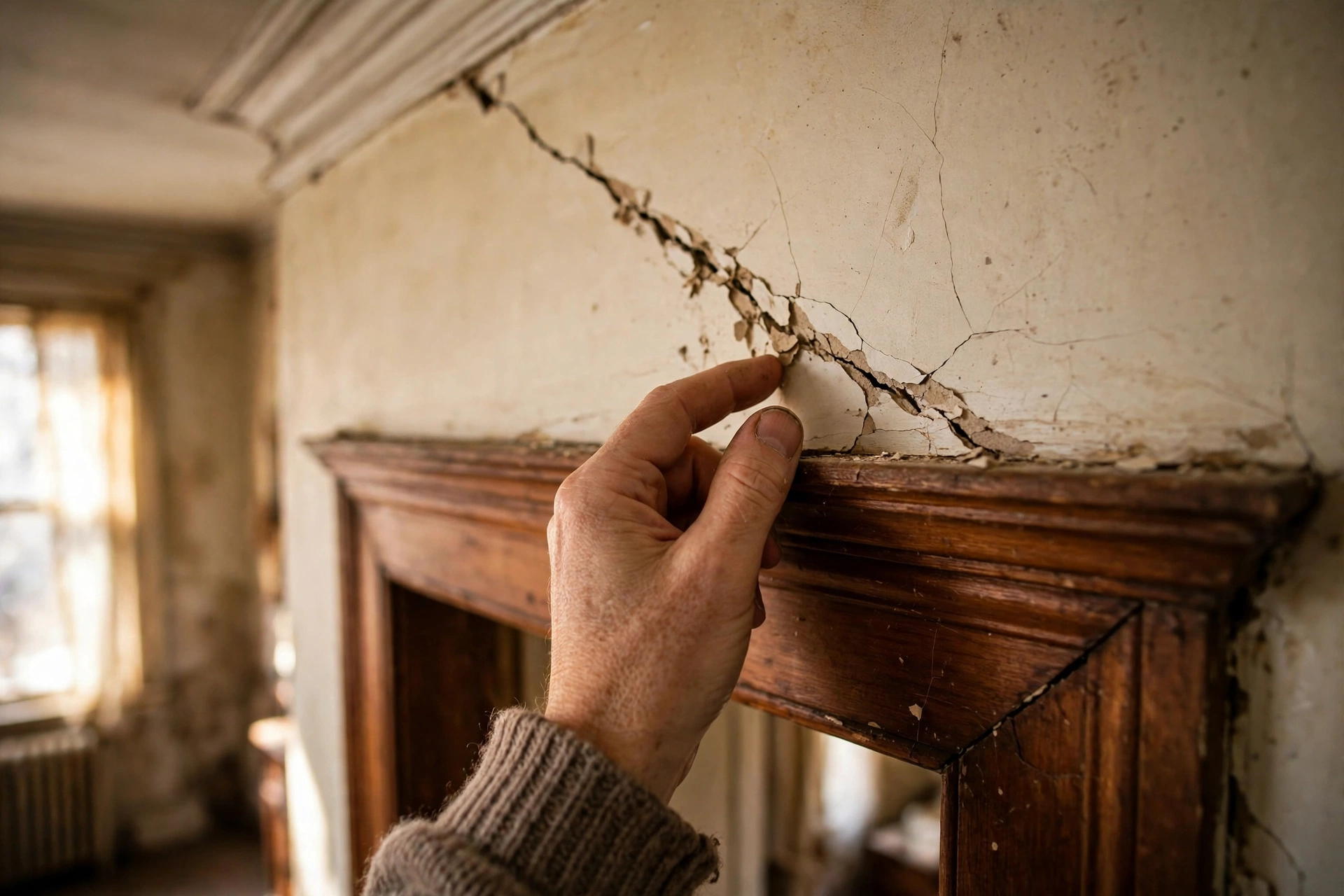
Not every crack means the same thing. Location, direction, width and whether it is changing matter more than length alone.
Hairline cracks at corners and seams. Thin lines where a wall meets the ceiling, at drywall seams, or in the corner of a room are very common in Hamilton, especially in winter. Cold, dry indoor air shrinks materials slightly, escarpment winds cool exterior walls unevenly, and a house that was tight in humid August opens small gaps in January. If the crack is hairline, stable year to year, and closes a little in summer, it is usually cosmetic — a flexible repair and repaint, not a structural worry.
Diagonal cracks from doors and windows. A crack running diagonally from the top corner of a door or window frame is a classic settling signature. Openings interrupt the wall, so movement concentrates at their corners. In century homes that have been settling slowly for a hundred years, an old, stable diagonal crack that has been painted over several times is part of the house’s history. The same crack, newly appeared, widening, or paired with a door that suddenly sticks, is worth monitoring with a dated pencil mark at its end and a photo.
Stair-step and horizontal cracks. In plaster, a crack that follows a stepped path or runs horizontally for a long stretch can point to plaster letting go of the lath, or to movement in what is behind it. In a basement or on an exterior wall, a horizontal crack deserves more attention than a vertical hairline — especially if it is damp, widening, or the wall itself is bowing. That is a pause-and-check case, not a fill-and-paint case.
Map or spiderweb cracking in plaster. A network of fine cracks across one area often means the plaster surface is crazing, or a previous patch was made with the wrong material and is shrinking away from the original wall. It looks dramatic, but the test is soundness: if the plaster underneath is still firmly keyed to the lath, a skim repair can restore it. If it is hollow over a wide area, patching only the surface will not hold.
Cracks that come back in the same place. A repair that re-cracks in the same line within months is telling you the movement is still active, or the repair did not match the wall system. Filling the same crack three times with the same filler is not a plan — the cause or the method needs to change.
Why Hamilton homes move the way they do
Settling over time. Every house settles. Century homes in Durand and Kirkendall have mostly done their major settling long ago, which is why so many of their cracks are old and stable. What reopens them is usually a new load, a renovation that changed how weight is carried, a leak that softened framing, or soil movement after a very wet spring.
Freeze-thaw and escarpment moisture. Water that gets into soil beside a foundation, into a small exterior crack, or behind a wall from a slow leak expands when it freezes. Hamilton’s swing-across-zero winters — melt in the afternoon, freeze at night, lake-effect snow followed by a thaw — repeat that pressure many times in a season. It is one reason a crack can look unchanged all summer and move in February.
Seasonal humidity swings. Wood framing swells in humid months and shrinks in heated winter air. On the Mountain and in Ancaster and Waterdown, newer homes with long drywall runs and vaulted or truss ceilings can show seam and corner cracks that follow the seasons. Truss uplift — where roof trusses arch slightly in cold weather and lift the ceiling drywall at interior partitions — is a known cause of a ceiling-corner crack that opens in winter and closes in summer.
Vibration and everyday use. Doors slamming, stairs flexing, and work elsewhere in the house all vibrate old plaster. A section whose keys were already weakened can let go months after the work that shook it, which is why plaster failures sometimes seem to happen for no reason in a quiet room.
Repair now, monitor, or check further first
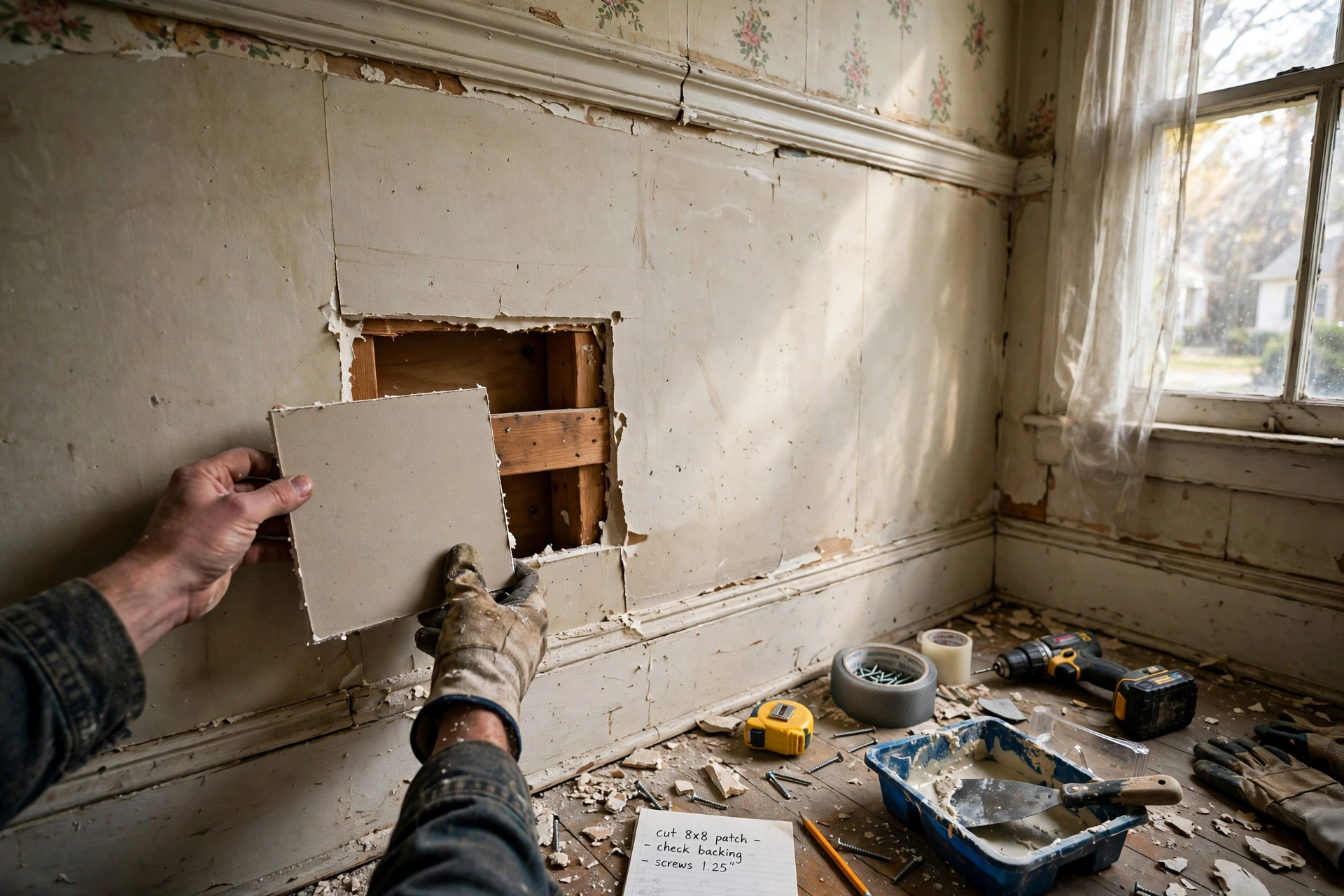
Repair now — cosmetic and sound. Hairline seam cracks, small doorknob holes and dents, stable diagonal cracks above doors, and surface crazing on sound plaster are all straightforward repairs. The wall is checked for hollowness and dampness first, loose material is removed, the repair is built in the material that suits the wall — backed and taped for a drywall hole, plaster-compatible repair and skim for lath-and-plaster — then sanded, primed and left paint-ready. Priming matters: unprimed compound and plaster flash through paint and the patch will show even if it is perfectly smooth.
Monitor — stable but worth watching. An older crack you are not sure about, a slight seasonal gap, or a crack in a house you have just bought in Stoney Creek or Dundas is a good candidate for a simple test. Mark the end of the crack lightly in pencil, write the date beside it, and take a clear photo with a coin for scale. Check it after the spring thaw and again next winter. A crack that has not moved through a full freeze-thaw cycle is telling you it is stable.
Check further first — do not just fill these. Pause before repairing if you find a crack that is widening month to month, a wall or ceiling section that is bulging or sagging, plaster that is hollow over a large area, any crack paired with dampness, staining or a musty smell, a horizontal crack in a foundation or basement wall, or doors and windows across one side of the house that have all started sticking at once. Those patterns can point to moisture, a failing plaster field, or movement that needs its cause addressed before the wall is closed up again. Covering them with filler hides the evidence without changing the outcome.
What a proper repair looks like
A lasting repair in an older Hamilton home follows the wall, not a one-size routine:
- Loose, hollow or crumbling material comes out first — a patch is only as sound as what it is attached to
- A drywall hole gets backing, a fitted piece, tape and compound built in coats, not a single thick fill that shrinks and cracks
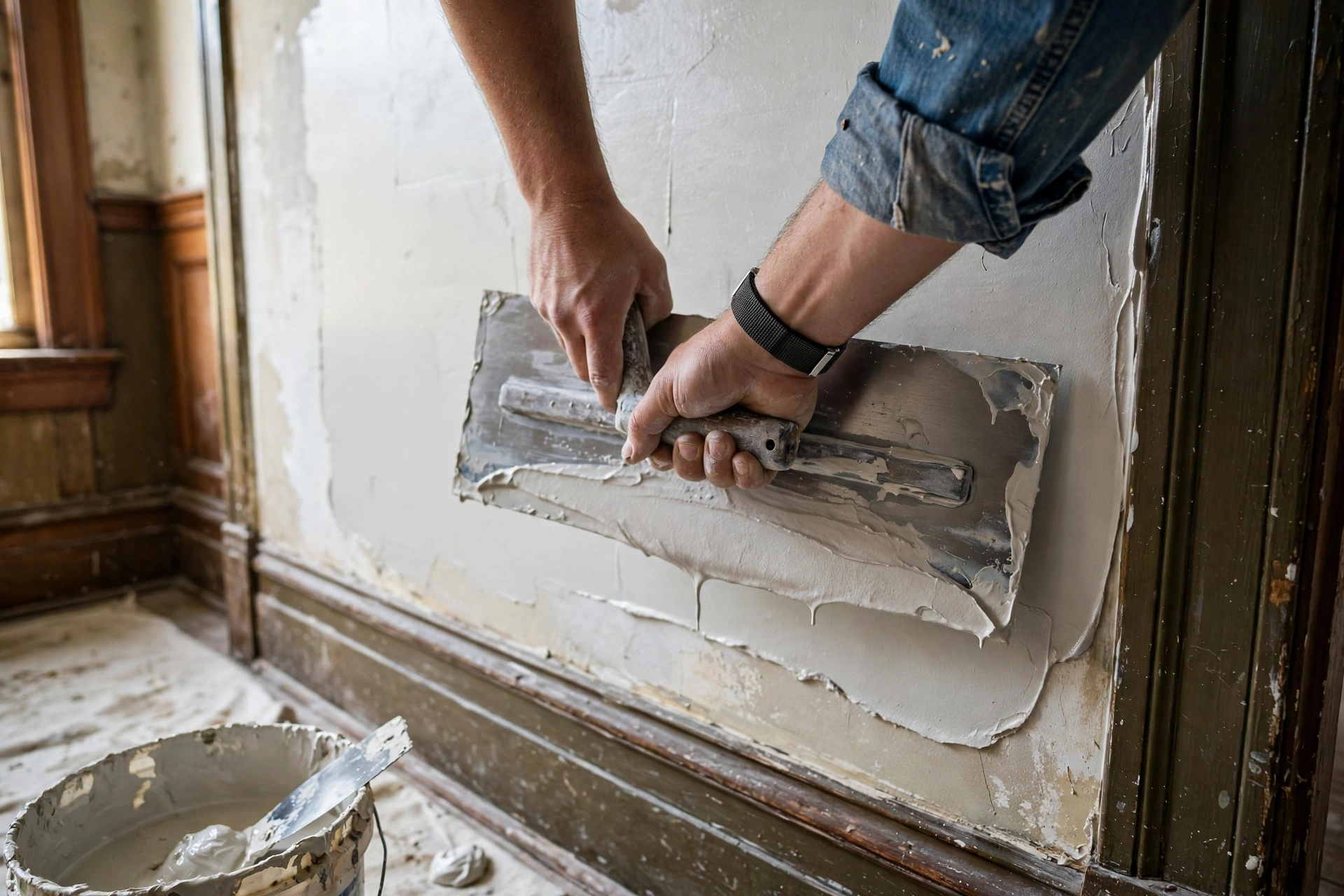
- Plaster gets a repair that bonds to the lath and the surrounding plaster, then a skim to blend the surface, rather than a hard modern filler sitting on a soft old wall
- Water-damaged board or plaster is only replaced once the leak source is fixed and the area is dry — board that is soft or mouldy is cut out, not mudded over
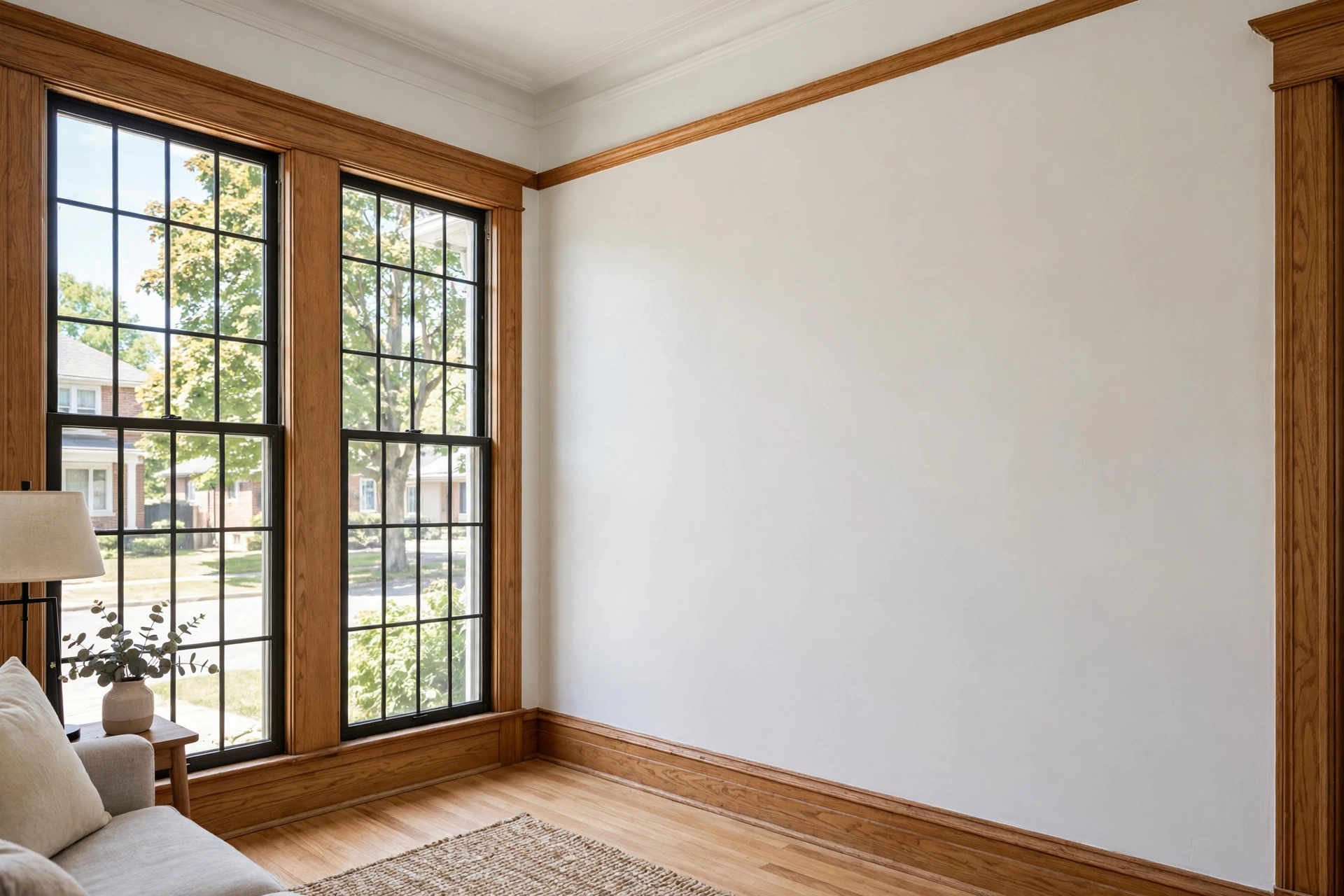
- Texture and sheen are matched as closely as the wall allows, and the repair is primed before paint so it disappears rather than flashing
Once repairs are sanded and primed, many owners bundle the repaint into the same visit. Our Painting Services in Hamilton covers that finishing step, which is what makes a well-built patch truly invisible in daylight.
A neighbourhood quick pass
Westdale, Kirkendall and Durand: Expect true lath-and-plaster, old stable settling cracks, and patches from many eras layered in one wall. Sound-test large areas before assuming a crack is only surface-deep, and expect trim and walls that are not perfectly square — that is character, not failure.
Dundas: Escarpment shade and moisture keep exterior walls cooler and damper longer. Check cracks on shaded, north-facing walls for dampness first, and watch window wells and grading that push water toward older foundations.
The Mountain and Ancaster: Mostly drywall, with seasonal seam cracks, nail pops and truss-uplift lines at ceiling corners in newer builds. The pattern to learn is seasonal — a crack that opens every January in the same place is movement to accommodate with a flexible detail, not a crack to fill harder.
Stoney Creek and Waterdown: Newer drywall in subdivisions that are still settling in their first years, plus older homes closer to the lake with plaster-era walls. In a newer home, note which cracks appear in the first two winters; in an older one, use the same plaster checks as the lower city.
Keep small cracks from becoming big repairs
Walk your home once each spring, after the thaw, with your phone for photos. Look above doors and windows, at ceiling corners, along basement walls and anywhere a previous patch lives. Catching a hairline crack while it is still a filler-and-paint job, and catching a damp or hollow patch of plaster while it is still one section, is the difference between a small visit and a wall that needs to come open.
If you are looking at cracks in a Hamilton home and are not sure whether they are cosmetic, seasonal, or a sign to check further, start with the tap test, the pencil mark and the photo. Then get the wall read by someone who will tell you which kind of crack it is before quoting the repair.
Call 289-276-1099 or visit our Contact page to book a visit. Service is available in Hamilton — including Westdale, Kirkendall, Durand, the Mountain, Ancaster, Dundas, Stoney Creek and Waterdown — daily from 9 a.m. to 9 p.m. at 202 St Clair Blvd, Hamilton, ON L8M 2P1.
A crack read correctly gets repaired once, in the right material — and stays repaired.