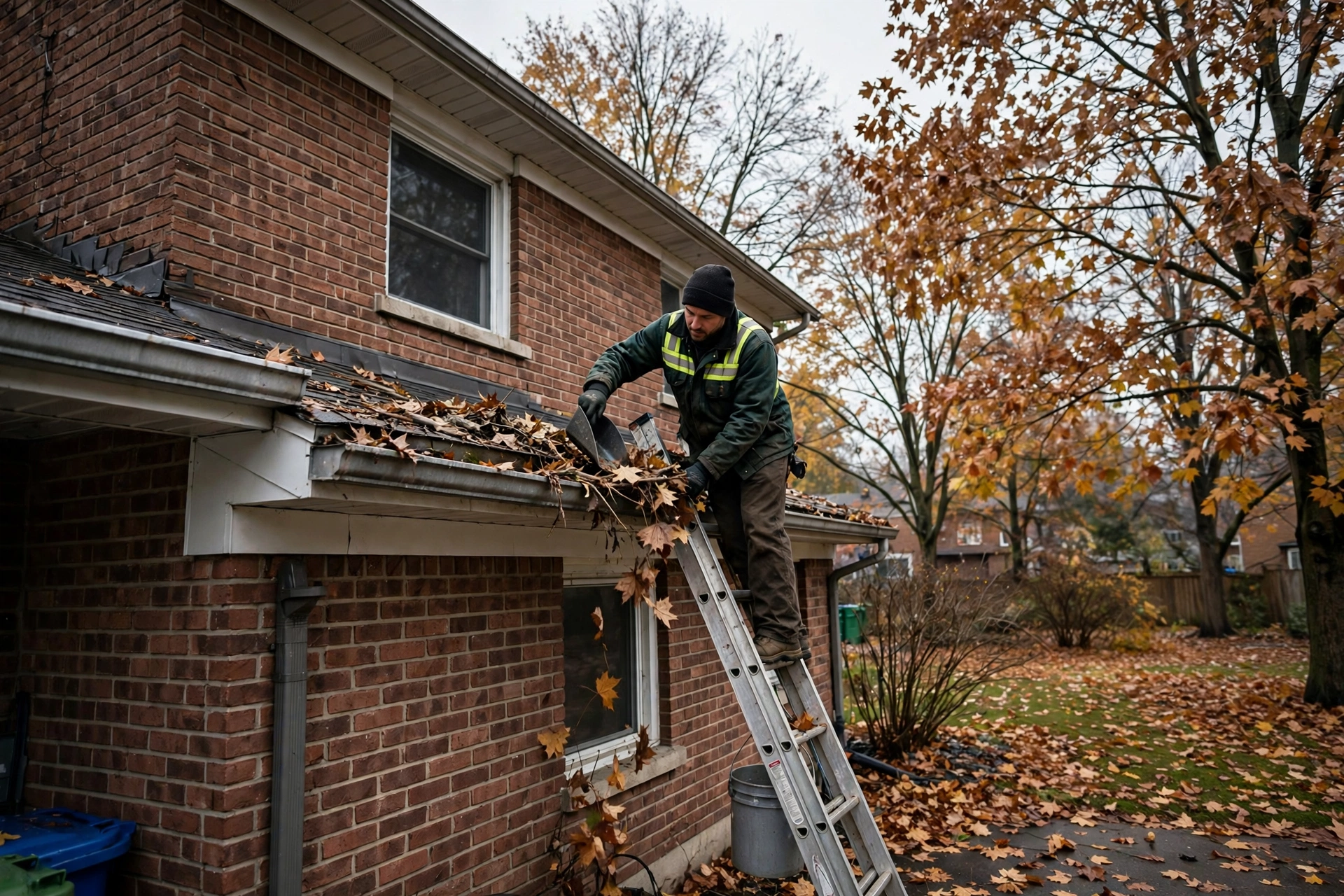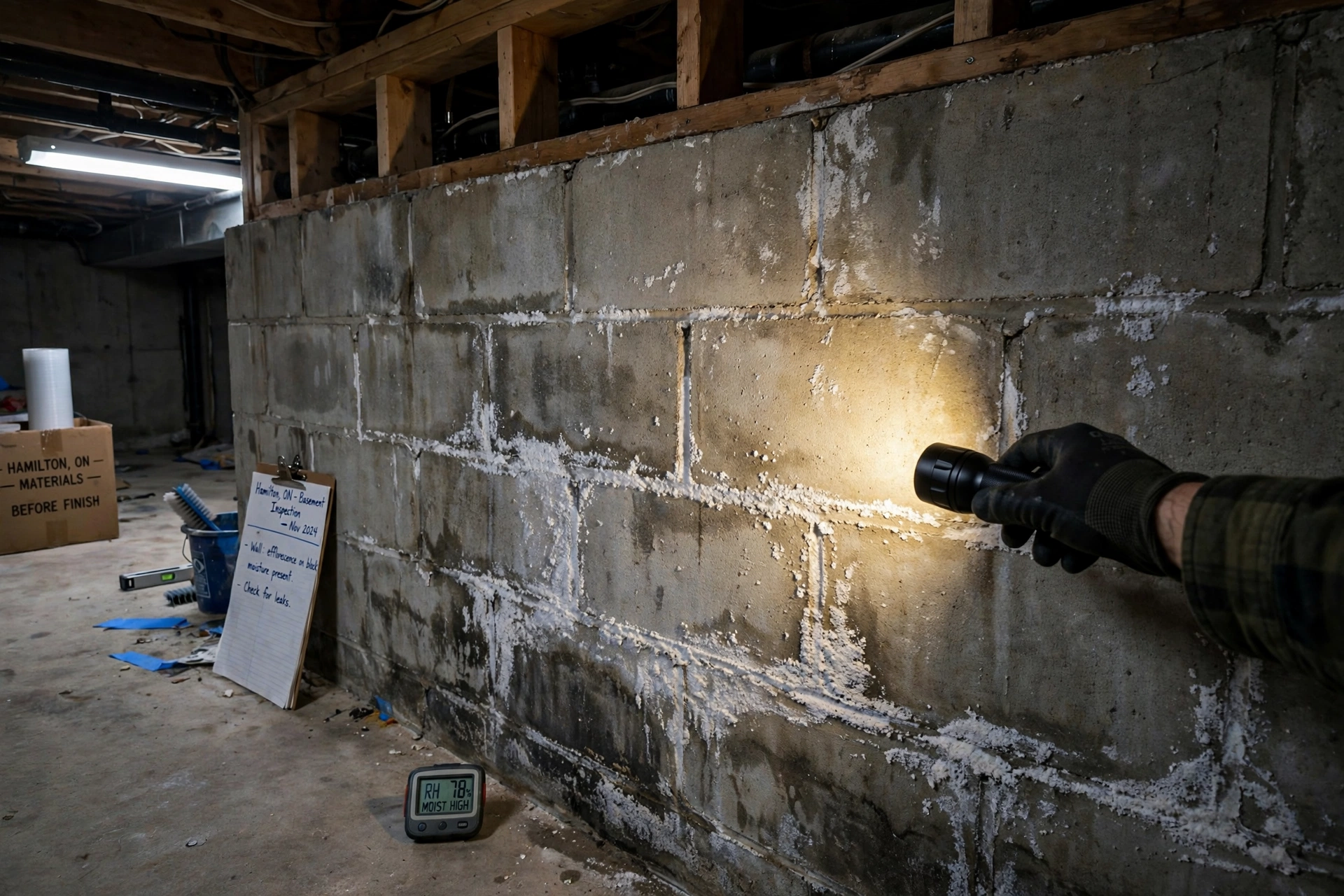

You can usually feel a Hamilton winter draft before you can see where it comes from. A cold line of air at the front door on a windy night in Westdale. A living room in Durand that never quite warms up, even with the heat running. Curtains moving slightly in a Kirkendall bedroom when every window is closed.
In older Hamilton homes, that air is rarely coming through the walls themselves. It is coming through gaps that have opened up over time — around doors that have shifted, windows that were painted shut and then forced open again, trim that has shrunk, and exterior joints where the original caulking gave up years ago. Weather stripping and caulking will not fix a furnace, insulation, or a broken window. What they do — and do well — is close the specific gaps where cold air, driven snow, and moisture are getting in.

This guide walks through where drafts actually start in Hamilton’s century homes, how to find them on a cold evening, and what sealing work helps, room by room and opening by opening.
Why century homes in Westdale, Durand and Kirkendall draft more
Westdale, Kirkendall and Durand were largely built before modern air sealing existed. Many homes are double-brick or brick-and-frame, with original or early replacement wooden windows, tall front doors, and additions that were joined to the original house in different decades. Each of those joins is a potential air path.
A few Hamilton-specific factors make it worse:
- Freeze-thaw movement. Escarpment weather swings above and below freezing through November, December and March. Wood, brick and old caulking expand and contract at different rates, and a joint that was tight in September can open a visible crack by January.
- Lake-effect wind. Wind off Lake Ontario finds the north and east sides of a house first. A door or window that seems fine on a calm day can leak hard when the wind is pushing against it.
- Settling and shifting doors. In a hundred-year-old frame, a door that rubbed in summer can gap at the top corner in winter as the wood dries out with indoor heating. That top corner is one of the most common draft sources in these neighbourhoods.
Find the draft before you seal anything
Do not start by caulking every window in the house. Start by finding which openings are actually leaking.
On a cold, windy evening, with the heat running:
- Use the hand test first. Move a bare hand slowly around the edges of each exterior door and window. You will feel most real leaks this way — a distinct cold stream, not just a cool surface. Cold glass feels cool; a leak feels like air moving.
- Check the obvious four places on every door: the top corner opposite the hinges, the meeting point where the latch pulls the door closed, the threshold at the bottom, and any gap where the frame meets the brick or siding outside.
- Check windows at the meeting rail and the sill corners. On double-hung windows, the rail where the two sashes meet is a classic leak, especially if the lock no longer pulls them tight together.
- Check the small openings people forget: around exterior light fixtures, hose bibs, dryer and bathroom vents, the attic hatch, and trim around a side door to a garage or a cellar entrance. Century homes in Durand and Kirkendall often have a side or rear door that is used rarely — and sealed rarely, too.
Write the list down. A typical older Hamilton home has three to five real problem openings, not twenty. Fixing those properly changes the feel of the house far more than a thin bead of caulk around everything.
Weather stripping: the door fix that does the most work
For doors, weather stripping is usually the single highest-value draft fix. It fills the gap between the door and its frame with a compressible seal, so when the door closes, the air path closes with it.
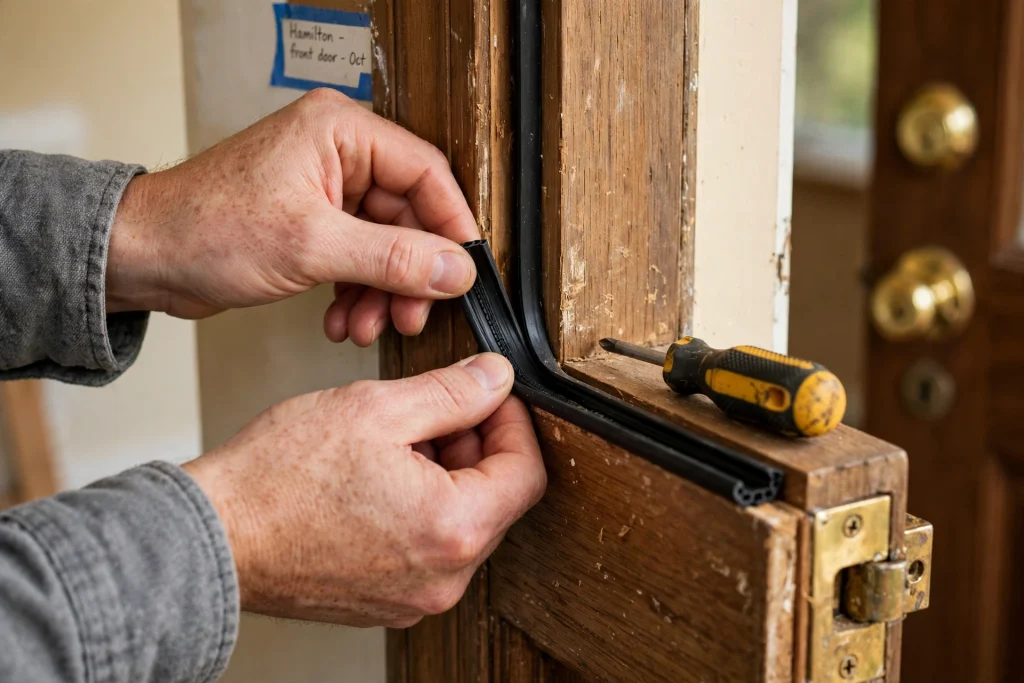
Signs the existing stripping has failed:
- You can see daylight around a closed exterior door
- A piece of paper slides out easily when closed in the door at several points — it should be held snugly
- The foam or rubber strip is cracked, torn, flattened, or missing a section at a corner
- The door rattles slightly in its frame when the wind gusts
Replacement is not one material for every door. A newer door with a routed groove takes a different seal than an original wooden door in a Westdale century home, where an applied surface seal or a metal-backed strip is often the better fit. The right choice depends on the size and consistency of the gap: a seal that is too thick will make the door hard to close and will wear out fast, and a seal that is too thin will look new and leak exactly as before.
The bottom of the door needs separate attention. A door sweep — a strip fitted along the bottom edge that meets the threshold — stops the under-door draft that weather stripping on the sides and top cannot reach. If you can feel cold air at floor level in the hall, or snow dust blows in under a rear door during a storm, the sweep or the threshold is the problem, not the side seals.
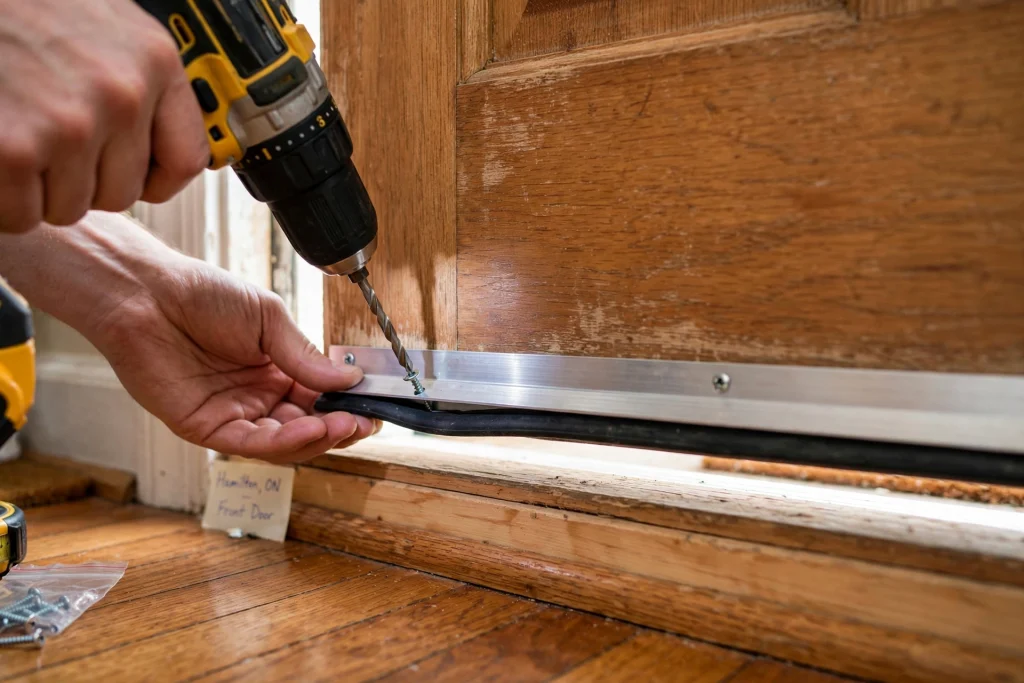
Our Weather Stripping Installation in Hamilton page covers the door and window options in more detail, including when a frame needs adjustment before a new seal can work.
Caulking: sealing the joints outside — and knowing its limits
Caulking seals stationary joints: where a window frame meets brick, where trim meets siding, around vents and fixtures, and at the corners where two materials meet. Unlike weather stripping, it is not for anything that moves. Caulking a door shut or a window sash to its frame is a mistake you will regret in spring.
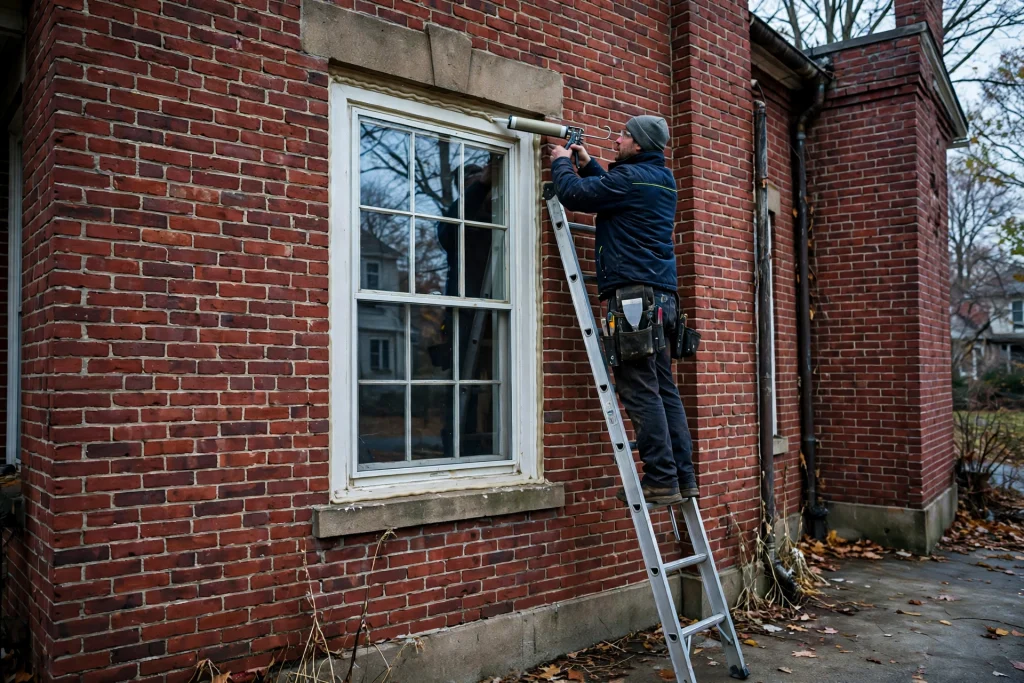
Before winter, check the exterior caulking at:
- Window and door frames, especially at the top and side joints where water and wind enter together
- Sill joints, where cracked caulking lets meltwater sit against wood
- Vents, hose bibs and electrical fixtures mounted on exterior walls
- The joint where an addition, porch or garage meets the original house — a long vertical joint that opens up in many older Hamilton homes
Failed caulking looks like this: cracked down the middle, pulling away from one side in a clean line, hard and shrunken, or missing in sections. Painting over failed caulking does not reseal it. The old material needs to come out so the new bead can bond to both sides of the joint, at the right depth. A bead smeared over a dirty, painted-over gap usually fails again within a season or two.
Note: do not seal brick weep holes — they let the wall drain. For the stationary joints around windows, doors and fixtures, our Caulking Services in Hamilton page explains where caulking helps and where the underlying problem needs fixing first.
Windows: seal the frame, fix the lock, then decide
Older windows draw the most complaints and need the most careful thinking. Work through them in this order:
- Exterior frame caulking — seal where the frame meets the wall, as above.
- The sash lock — if the lock does not pull the two sashes together tightly, no seal at the meeting rail will work properly. A lock adjustment or replacement is small work that makes the rest worthwhile.
- Interior removable sealing for windows you do not open in winter — for a window that stays closed all season, a removable interior seal can cut the draft without permanently sealing the window shut.
What sealing will not do is turn a single-pane window into a double-pane one. The glass will still feel cold, and condensation can still form on it. If a room feels drafty but your hand test finds no moving air at a closed, sealed window, the discomfort may be cold glass and outside-wall temperature, not a leak — and that points to a different conversation than weather stripping.
A neighbourhood quick pass
Westdale: Original doors and tall windows near McMaster and the mature tree streets. Prioritise the front door top corner, the meeting rails on double-hung windows, and rarely used side doors.
Durand: Larger century homes, many with porches, additions and multiple exterior doors. Check the porch-to-house door, addition joints, and attic hatches — upper-floor drafts here are often hatch and top-floor window leaks.
Kirkendall: A mix of century homes and wartime builds on and below the escarpment edge. Check rear doors and basement-level entrances that face the wind, and exterior caulking on the windward side first.
When a draft is a sign of something else
Call the draft what it is, and do not let sealing hide a bigger problem. Get the underlying issue looked at if:
- A door no longer closes or latches properly — the frame or hinges may need adjustment before any seal will work
- Wood at a sill, threshold or frame feels soft — that is rot, and sealing over it traps the damage
- Water stains appear around a window after thaw or driven rain — that is a water entry path, not just air
- One room stays far colder than the rest with no leak found — heating distribution or insulation may be the real cause
Sealing is finish work that works best on sound frames and joints. Where the wood and the frame are sound, it is straightforward, lasting work. Where they are not, fixing the base first is what makes the seal last.
Stop the drafts before deep winter sets in
If you can feel cold air around your doors and windows, late fall is the time to deal with it — exterior caulking still cures properly, doors can be adjusted and resealed in a single visit, and you get the benefit for the whole winter instead of half of it.
Call 289-276-1099 or visit our Contact page to book. Service is available in Hamilton — including Westdale, Kirkendall, Durand, the Mountain, Ancaster, Dundas, Stoney Creek and Waterdown — daily from 9 a.m. to 9 p.m. at 202 St Clair Blvd, Hamilton, ON L8M 2P1.
Seal the doors that leak, re-caulk the joints that have opened, and a Hamilton century home feels like a different house on the first windy night of winter.